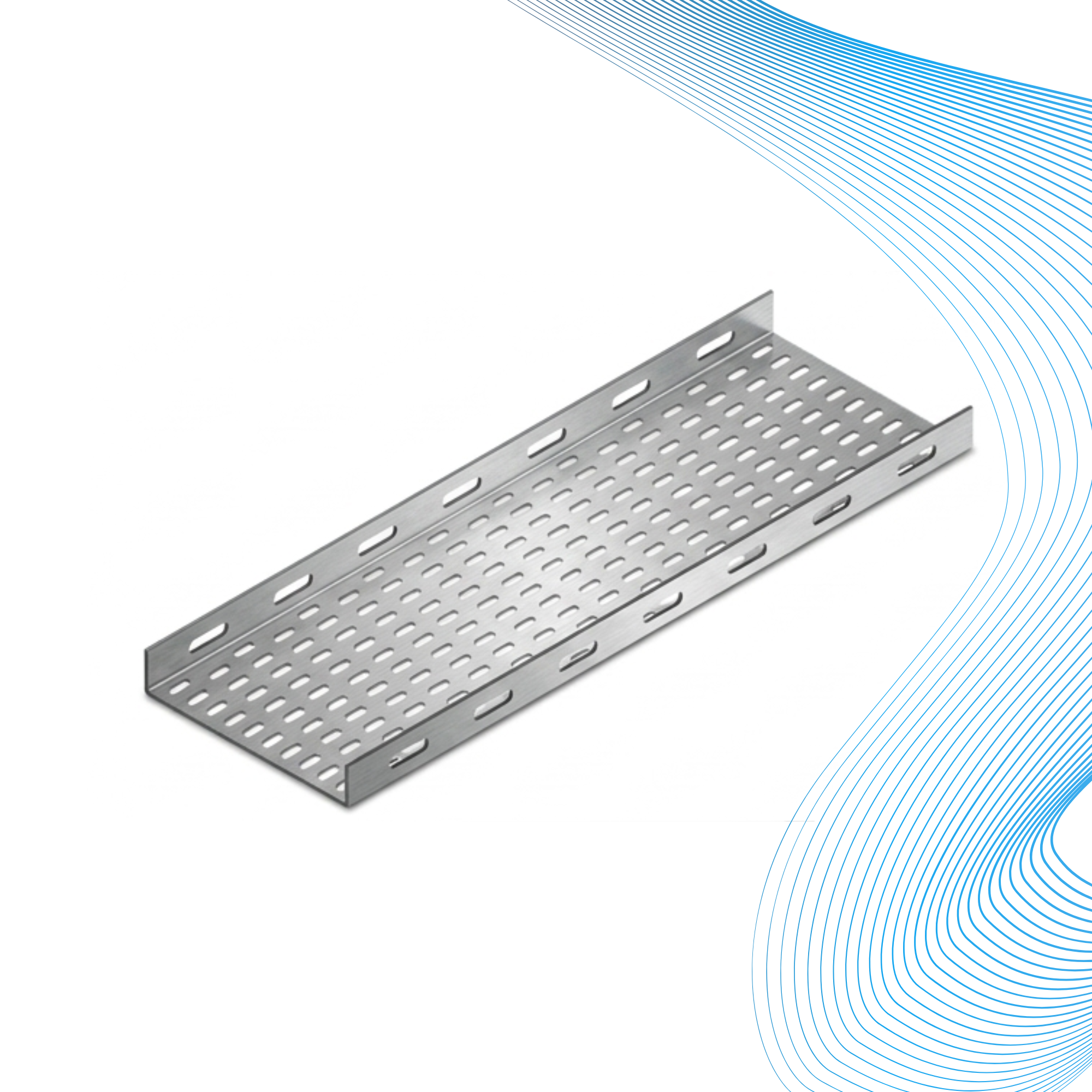





Cable trays are essential cable management systems designed to support, route, and organize electrical cables in commercial, industrial, and infrastructure projects. Unlike trunking, cable trays are typically open systems, allowing easy inspection, ventilation, and maintenance of cables.
Cable trays are widely used in large installations such as factories, power plants, malls, and buildings where multiple cables need structured routing and support. They provide a safe and efficient alternative to conduits for large cable volumes
Features & Benefits
- Open Cable Support System – Easy access for inspection and maintenance
- High Load Capacity – Supports heavy power and data cables
- Durable Metal Construction – Made from GI, stainless steel, or aluminum
- Efficient Heat Dissipation – Open design prevents overheating
- Flexible Installation – Suitable for wall, ceiling, and floor mounting
- Expandable System – Easy to add or modify cables
Specifications
| Attribute | Details |
|---|---|
| Product Type | Cable Tray |
| Material | GI / Stainless Steel / Aluminum / FRP |
| Type | Ladder / Perforated / Solid Bottom / Wire Mesh |
| Width Range | 50 mm – 1000 mm |
| Height | 25 mm – 150 mm |
| Length | 2 m – 3 m standard |
| Finish | Pre-Galvanized / Hot Dip Galvanized / Powder Coated |
| Load Capacity | Light to Heavy Duty |
| Application | Cable Support & Routing |
| Suitable For | Industrial, Commercial, Infrastructure |
Types of Cable Tray
- Ladder Type Tray – Best for heavy power cables and long spans
- Perforated Tray – Good ventilation with moderate support
- Solid Bottom Tray – Extra protection for sensitive cables
- Wire Mesh (Basket) Tray – Ideal for data and network cables
Measurements
- Common Sizes:
- 50 × 50 mm
- 100 × 50 mm
- 150 × 50 mm
- 300 × 50 mm
- 400 × 100 mm
- 600 mm width and above
- Thickness Options: 0.7 mm – 2.5 mm
Materials & Care
Materials
Cable trays are typically manufactured from galvanized steel (GI) or other metals for strength and corrosion resistance. The zinc coating protects against rust, making them suitable for indoor and outdoor use.
Care & Handling
- Ensure proper support spacing during installation
- Avoid overloading beyond rated capacity
- Keep clean from dust and debris
- Use proper earthing for metal trays
- Inspect regularly for corrosion or damage
Additional Details
- Ideal for large cable installations and industrial wiring systems
- Provides better ventilation compared to trunking systems
- Commonly used in factories, malls, hospitals, and infrastructure projects
- Works together with GI trunking and cable ladders for complete systems